If you’re looking for a trip out of London that’s full of history, a day trip to St Albans is an ideal option. With Roman ruins, a Norman cathedral and an Eleanor Cross, it’s a history-lover’s dream.
How to get to St Albans from London
St Albans is about 20 miles north of London. You can get there directly on the Thameslink, which is a train line that runs vertically through the middle of London, passing through several major stations. So you could embark at Blackfriars, St Pancras, Farringdon or London Bridge as well as lots of smaller stations along the way.
The journey from Blackfriars to St Albans takes 30 to 40 minutes.
What to do in St Albans: Roman ruins
In Roman times, St Albans was a major city called Verulamium. St Albans’ Roman history shaped the city as time went on and is still very much part of the modern city today, both visually and culturally.
Here are some recommendations for seeing St Albans’ Roman history.
Verulamium Park
Verulamium Park is a 100-acre expanse of greenery on top of where Verulamium once stood. The ruins of Verulamium still exist but are mostly unexcavated, other than portions of it which are found in the Verulamium Museum (see below) and around the park.
Verulamium Park has football fields, playgrounds and a café so I imagine it’s a nice spot in the summer. I went in the winter and it was wet and muddy, so you might want to choose your footwear accordingly!

Verulamium Museum
Verulamium Museum is on the edge of Verulamium Park and contains a range of artefacts and displays from the Roman city, including some spectacular mosaics. If you are interested in Roman history and you want to dive further into the details of the city, the museum is well worth a visit on a day trip to St Albans.
Roman wall and Roman theatre
Within Verulamium Park there is a small segment of Verulamium’s Roman city walls and also the ruins of a Roman theatre. I just think it’s amazing that these two-thousand-year-old remains are still standing in an everyday park in England!

Mosaic and hypocaust
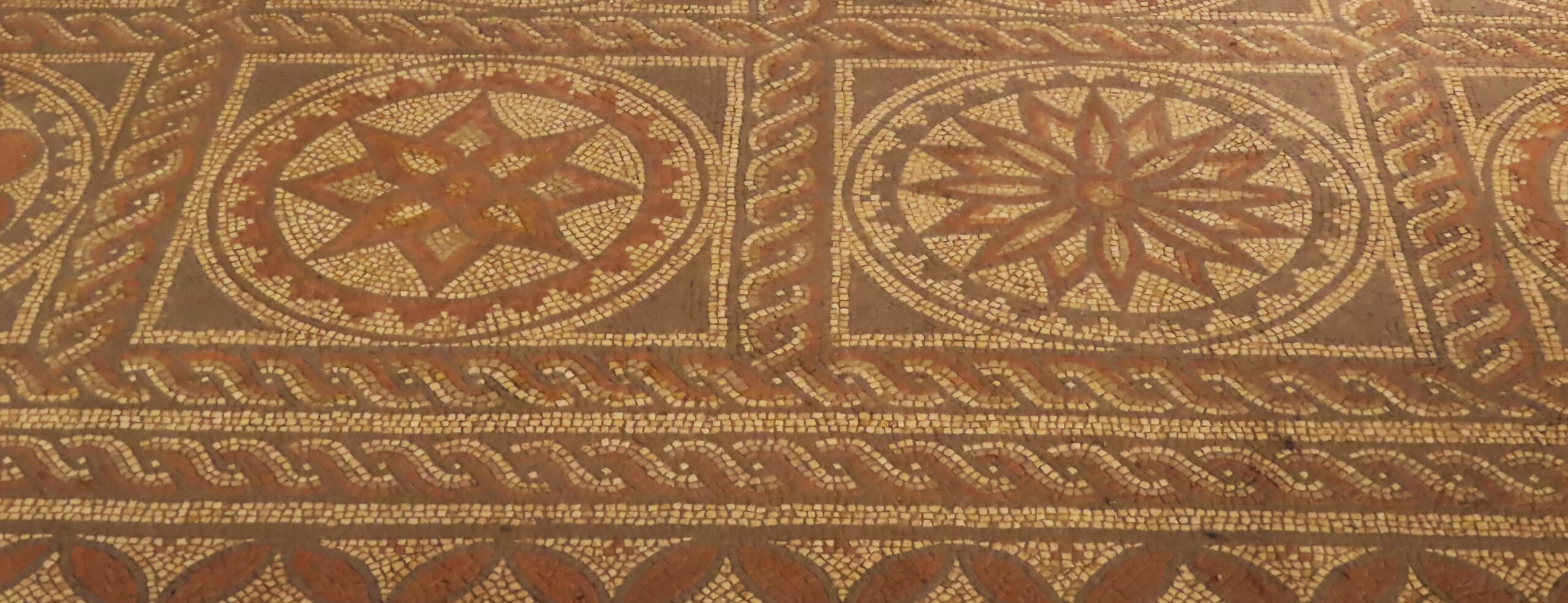
Also within Verulamium Park is a small, innocuous building which houses the remains of the mosaic floor of a Roman villa. This was uncovered in the 1930s as part of wider excavation works and it is extremely well-preserved.
The mosaic consists of patterned squares and is typically intricate, but one of the squares includes a mistake where the tiles were laid at the wrong angle!
Underneath the mosaic floor was a hypocaust. This was a Roman underfloor heating system whereby hot air or smoke passed through spaces underneath the floor, emanating from a fire which would have been stoked by a slave in a side room. Part of the mosaic has been removed so that the mechanics of the hypocaust are visible to visitors.

What to do in St Albans: medieval history
Although the Roman Empire fell at the turn of the fifth century, St Albans remained an important settlement well into the medieval period. Here are some medieval landmarks you should visit on your day trip to St Albans.
St Albans Cathedral
You can’t miss St Albans Cathedral whilst you’re here. Much of the structure is Norman – in particular look out for the quintessential Norman square stone tower at one end. The older parts of the cathedral were built using material from the ruins of Verulamium, linking together St Albans’ Roman history with its medieval period.
The cathedral contains the shrine of St Alban, who was a Roman Christian and was martyred in around the year 300. Although there is little concrete information about St Alban’s life, he was evidently important enough to give his name to the city!
Entry to the cathedral is free but donations are encouraged.

St Michael’s Church
Just north of Verulamium Park is a little medieval church: St Michael’s. This church sits on the site of a Roman basilica but most of the building you can see today dates from the tenth or eleventh century.
St Michael’s is a peaceful spot and it was empty when I went in. It’s a lovely quiet break – you feel as though you should whisper whilst pacing slowly around its whitewashed walls and wooden features.
Site of an Eleanor Cross
Finally, this is one you could easily miss if you weren’t looking out for it. In the town centre is a plaque recording the site of one of the twelve Eleanor Crosses.
The Eleanor Crosses marked the locations where the body of Queen Eleanor of Castile, beloved queen consort of King Edward I, made stops on its journey to London from Nottinghamshire where she died in November 1290. The Crosses were tall, elaborate structures and only three of the original Crosses survive today. St Albans was the ninth stop on the route, with the final stop being Charing Cross in London.
The original Eleanor Cross at St Albans is unfortunately not among those which have survived but the site of it is marked by a dark red plaque on the side of the square Clock Tower, another of St Albans’ main medieval structures.

Other historical day trips from London
If you like the sound of this day trip to St Albans, and if you’re looking for more day trips from London with a similar historical vibe, consider:
- Cambridge
Home to an 800-year-old university and full of old chapels, churches and libraries.
- Rochester
Originally a Roman settlement, with an impressive castle and a thousand-year-old cathedral.
- Norwich
An Anglo-Saxon city packed with medieval buildings, and also a UNESCO Creative City of Literature.
- Canterbury
Site of a world-famous cathedral and location of the murder of Thomas Becket in 1170.
Leave a Reply