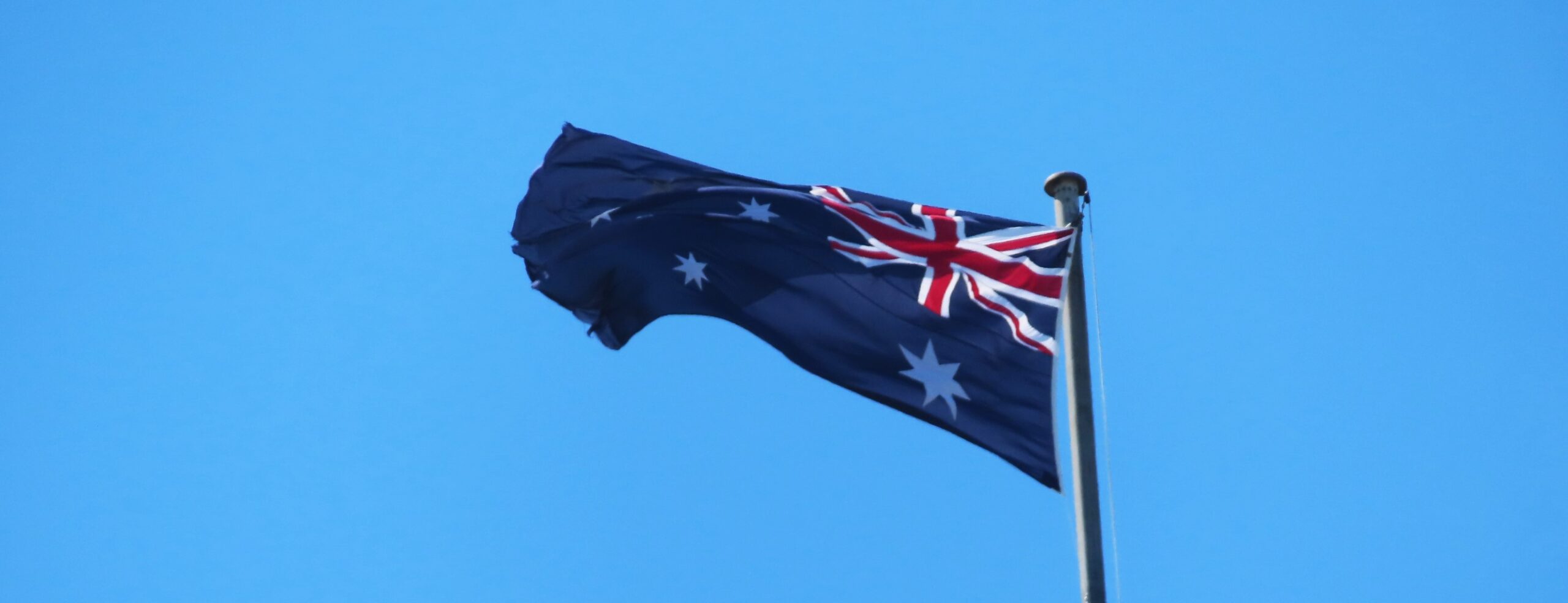
It’s not often you happen to be in a country for its national day. But I was in Sydney for Australia Day in 2025.
What is Australia Day?
Australia Day is the anniversary of British ships landing at what is now Sydney Harbour on 26 January 1788. This was the first time Europeans had set foot on what is now Australia.
Controversy around Australia Day
For nearly a century, Australia Day has generated considerable debate. The controversy centres around the fact that indigenous people were already living in Australia when it was claimed as British by the seafaring settlers. To many, Australia Day is a whitewashed commemoration of colonisation, oppression and death.

My expectations
What was I expecting from Australia Day?
If we had a national day in Britain, I strongly suspect it would be dominated by two main groups of people. First, the anti-immigration nationalists wearing flags as capes, drinking their way through the day and then clashing violently with police in the evening. Second, hordes of protestors marching through the streets carrying placards condemning the racism and disorder shown by the first group and generally objecting to Britain’s role in colonisation and the slave trade. Perhaps there would be a third group of uncomfortable bystanders wondering exactly what about Britain we were meant to be celebrating.
Essentially, I expected Australia Day to showcase this sort of polarisation, focusing on the silencing of indigenous people which resulted from Britain’s colonisation of Australia.
My experience of Australia Day in Sydney
I was fortunate enough to see both sides of Australia Day when I was in Sydney. What I saw indicated much less belligerence on both sides compared to what I expected.
Aboriginal art festival
First, I went to an aboriginal art festival in Victoria Park. This was abuzz with stalls. Many were displaying brightly patterned aboriginal prints, paintings and jewellery. Others represented organisations and charities for aboriginal people, such as legal assistance or healthcare. A mix of scents from various food trucks wafted around the park.
In the middle sat a crowd of spectators around a stage and a circle of sand. This was the location for different groups performing traditional aboriginal dances, adorned in furs or grass skirts, with thick white patterns painted on their skin. A singer and a hefty man playing a didgeridoo accompanied many of the dances.

Although this was a new and fascinating sight for me, I was happy to see that the Australians were simply enjoying the performances without batting an eyelid at the cultural differences. This suggested to me that visible indigenous culture is normalised in Australian society rather than being a novelty displayed only on certain days of the year. In turn, this hinted at a peaceful and ingrained integration of cultures in Australia.
Australia Day at Sydney Harbour
Sydney Harbour hosts Sydney’s main Australia Day celebrations. There is a timetable of events throughout the day, culminating in the evening with the Australian of the Year Awards (national and regional), performances of Australian music, and fireworks over Sydney Opera House.
The harbourfront was busy, with people going out on sightseeing boats and then returning to the harbour’s bars for a refreshing glass of wine. We also headed down that way to see what it was all about, and settled at a bar in Darling Harbour.
The mood was festive and cheerful. A woman at the next table stuck mini Australian flag stickers to our hands. Later, we got chatting to her and her friends and we briefly discussed the Australia Day debate. The impression I got was that these people simply wanted to focus on enjoying the summer weather and the public holiday. They were dismissive of the seriousness of those opposed to the celebrations, feeling that they were attempting to dampen spirits on what would otherwise be a nice day out in an iconic Australian city centre.
I did not necessarily have the impression that they disagreed with the fact that indigenous people were oppressed by the incoming British, only that they did not consider that that should be the focus of the day.

Extreme views
I have mentioned above that I expected to see polarised and antagonistic participants on both sides. Indeed, social media and news outlets portray only the extreme ends of the spectrum, with people picking a side and valiantly sticking to it.
Certainly those people do exist. An Australian friend had specifically warned me to avoid groups of drunk people wearing the flag as capes, so I have no doubt that they do pose a problem significant enough to mention (although I did not see any of these people). And I know from reading the slogans on people’s t-shirts and signs at the aboriginal art festival that many people do view Australia Day as a day of invasion and mourning for a genocide. Even this language alone proves how strongly people feel about the issue.
Australia Day as a Brit
Selfishly, I was relieved that nobody in Sydney seemed to place any focus on the fact that my fellow Brits (from the eighteenth century) were the root of the entire issue.
More seriously, as a Brit I can ultimately never truly understand what it’s like to live somewhere where the majority demographic/culture isn’t the one that was there first. Britain is certainly a melting pot of different cultures, and immigration has long been a hot topic there. But in Australia, an ancient culture was almost destroyed by new settlers wielding power, forcing Australia’s original occupants into a position of subservience. That’s a bit more extreme than an argument about the merits of Brexit.
The best analogies to Australia Day that I can think of from a British perspective are the late Queen’s Platinum Jubilee and the King’s coronation (albeit these were one-off events so are not directly comparable to the annual Australia Day). Many people engaged with and enjoyed those events, rightly or wrongly without thinking too hard about whether or not it is acceptable that we have an unelected monarchy. It was not a case of extremes, by which I mean it was not the case that everyone attending Jubilee tea parties was a staunch pro-monarchy nationalist and anyone not attending them was busy campaigning angrily for the monarchy’s immediate downfall. Most people simply took the opportunity to enjoy the four-day weekends and the Union-Jack-adorned cakes in relatively good weather without giving thought to the uncomfortable questions behind it. I had the impression that many people apply the same sentiment to Australia Day.
Disagreement about what to celebrate
So what does Australia Day actually celebrate? This, I think, is the key to the disagreement. Is it:
- The colonisation of Australia by white Europeans?
- Indigenous culture?
- Australia as it is now, indigenous aspects included?
- A long weekend in the summer, with little thought about the details behind the holiday?
Or maybe a mixture of all of the above (perhaps excluding the first item)?

The aversion to a ‘celebration’ on Australia Day was clearly evident at the indigenous art festival. But this sentiment was peaceful, communicated through slogans on clothing or on posters at some of the stalls.
The mood at Sydney Harbour was undeniably celebratory. But are those people actually celebrating the colonisation of Australia? Or are they celebrating the country that Australia now is as a whole, and the achievements of Australians in modern times? By celebrating the latter, are they inadvertently condoning the former?
My observation as an uninitiated foreigner is that there is a huge spectrum of opinions, almost all of which have credence. This leads to the conflict about Australia Day resulting from the varied assumptions different groups are making of the others. Those focusing on indigenous voices feel that those celebrating Australia Day on the harbour are tone-deaf, ignoring the harm inflicted on indigenous people in favour of having fun in the sun on a long weekend. Those having fun in the sun on a long weekend feel that those focusing on indigenous voices are putting a dampener on their fun, and – in a sentiment I hate – being too ‘woke’ about the whole thing. (Personally, I don’t think it’s a bad thing to be inclusive towards marginalised voices but hopefully ‘woke’ was a poorly-chosen adjective by a man I spoke with in a bar on Sydney Harbour.)
The fact is that millions of people are happy just to take the public holiday at face value and enjoy what the day offers. Arguably people ought to be thinking more carefully about the meaning behind Australia Day. But the fact that they aren’t does not automatically mean that they condone colonisation. In my view, that leap of logic is too much of a generalisation.

Incidentally, I also wonder which side the stereotypical nationalist flag-wearing Brit would support in a debate about Australia Day. As I understand it, those people oppose immigration to Britain on the basis that it threatens the original British (white) culture, and because those people are stealing our jobs and sponging off the state, etc. (I’m probably putting words in their mouths here but I don’t think I’ve got that too far wrong.) Would they therefore support the indigenous Australians’ side of the argument, on the basis that they were there first and that the British immigrants invaded their land and interfered with their culture? Somehow I doubt they would see it this way. This question would be a test of the motivation behind the different arguments, and it makes me wonder about the extent to which racial prejudice comes into the equation in both Britain and Australia.
The debate continues
The very fact that opinions about Australia Day range from the mild to the extreme shows that Australia Day is mired in controversy and, as it has done for the past century or more, will remain so for the foreseeable future.